Article
Feb 13, 2026
Case Study: How We Built a Multi-Channel B2B Lead Generation Strategy for Finage (High-Ticket SaaS)
This case study shows how we built a full-funnel B2B lead generation system for Finage — a high-ticket SaaS platform in the financial data API market. Instead of relying on one-off ad campaigns, we focused on creating a predictable multi-channel growth engine aligned with long B2B sales cycles and complex decision-making processes.

Client Overview
Finage is a B2B financial data and analytics platform providing real-time and historical market data APIs for stocks, forex, crypto, and other asset classes.
The product operates in a high-ticket B2B SaaS segment, where:
The buying cycle is long
Sales rarely happen on the first interaction
Decision-makers evaluate multiple vendors before committing
Trust, credibility, and technical validation are critical
This required a multi-touch, multi-channel acquisition strategy rather than a simple “run ads → get sales” approach.
Challenge
Finage needed to scale qualified B2B demand, not just website traffic.
Key challenges:
Highly competitive market (financial data APIs, developer tools)
Long sales cycle and high deal values
Low probability of first-touch conversion
Multiple buyer personas (developers, founders, product managers)
Need to balance immediate lead generation with long-term demand capture
A traditional single-channel paid ads approach would not be sufficient.
Strategy: Building a Full-Funnel B2B Growth System
We designed a full-funnel acquisition system aligned with B2B buying behavior and long sales cycles.
1. High-Intent Demand Capture (Google Ads)
We started with high-intent search traffic to capture buyers already in evaluation mode:
“financial market data API”
“stock market API for developers”
“real-time forex API”
“crypto price API”
Focus:
Bottom-of-funnel keywords
Category-level intent
Competitive positioning
This allowed us to generate early qualified demand while validating messaging and offers.
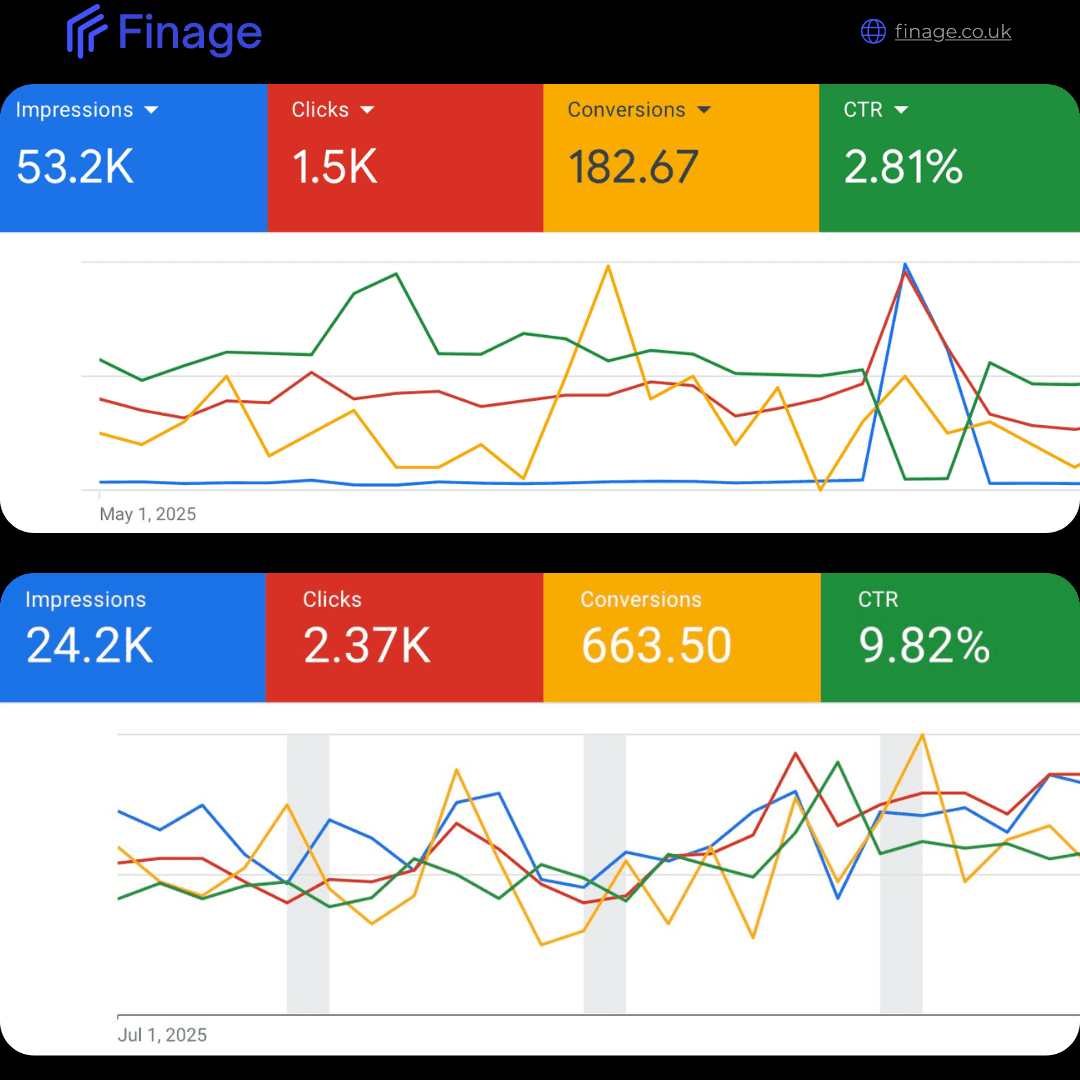
2. Multi-Channel Retargeting (Reddit & LinkedIn)
Because Finage operates in a high-price B2B SaaS segment, conversions rarely happen on the first visit.
We built a structured remarketing system:
Reddit remarketing
Re-engaged technical audiences (developers, founders)
Reinforced product positioning and use cases
Supported long consideration cycles
LinkedIn remarketing
Targeted decision-makers and B2B professionals
Reinforced credibility and brand authority
Kept Finage top-of-mind during long evaluation phases
Remarketing allowed us to:
Increase assisted conversions
Improve overall pipeline efficiency
Reduce dependency on first-touch conversions
This was critical for making paid acquisition financially viable in a long sales cycle environment.
3. Conversion-Focused Landing Page Optimization
We optimized Finage’s landing pages to better support B2B decision-making:
Key improvements:
Clearer value proposition for different user segments
Stronger positioning around reliability, latency, and data coverage
Improved messaging for developer use cases
More structured CTA logic for different stages of intent
Landing pages were aligned with:
High-intent search traffic
Retargeting campaigns
Product-specific entry points
This improved conversion quality rather than just conversion volume.
4. SEO & Link Building on Relevant Platforms
To support long-term growth and reduce dependency on paid acquisition, we worked on authority building:
Link acquisition from relevant SaaS, finance, and developer-focused platforms
Content placements on contextually relevant resources
Strengthening domain trust and topical authority
This improved:
Organic visibility
Brand credibility
Conversion rates from both paid and organic channels
Paid acquisition and SEO were treated as complementary growth engines, not separate initiatives.
5. Funnel-Level Measurement (Not Just Clicks)
Given the B2B SaaS nature of the product, success was measured beyond basic ad metrics:
Instead of optimizing only for:
Clicks
CTR
CPC
We focused on:
Qualified lead quality
Conversion progression through the funnel
Assisted conversions from remarketing
Multi-touch attribution logic
This ensured we optimized for pipeline impact, not vanity metrics.
Results
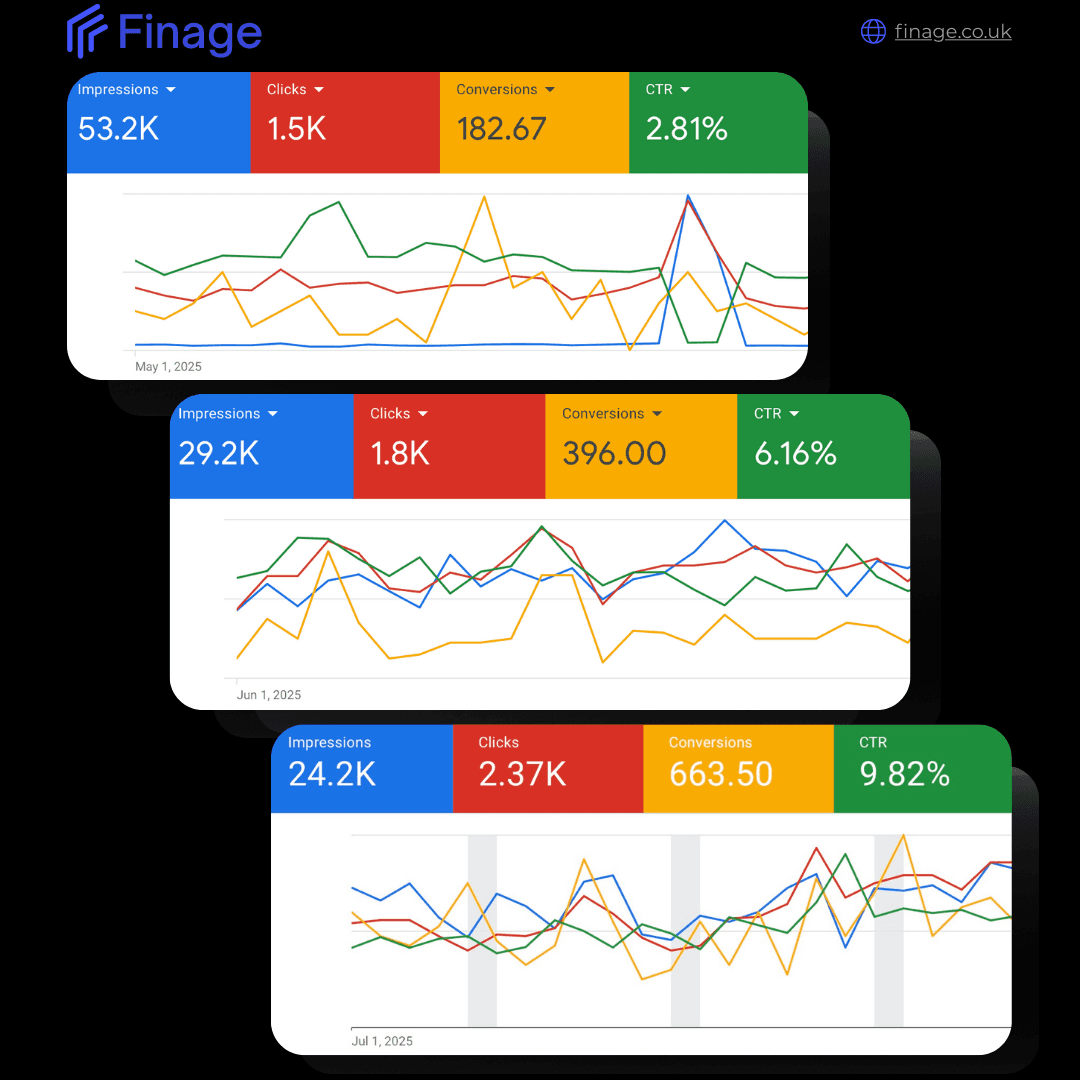
Key outcomes from the campaign structure:
Increased volume of qualified B2B inbound leads
Improved conversion rates from high-intent search traffic
Strong performance of remarketing across Reddit and LinkedIn
Better engagement with returning users
Improved performance of landing pages through focused optimization
Most importantly, the system created predictable demand flow for a high-ticket SaaS product with a long sales cycle.
Key Takeaways for B2B SaaS Brands
This case highlights several principles that are critical for B2B SaaS growth:
High-ticket B2B products require systems, not single campaigns
First-touch conversions are rare — remarketing is not optional
Multi-channel presence improves trust and recall
SEO and paid acquisition should work together
Optimization must be tied to pipeline outcomes, not just traffic
For B2B SaaS brands, growth comes from building a repeatable demand engine, not just launching ads.
Final Thoughts
Finage’s growth strategy was built around how B2B buyers actually behave:
They research
They compare
They return multiple times
They convert after trust is built
By combining high-intent search, structured remarketing, conversion-focused landing pages, and long-term SEO authority, we created a scalable and predictable acquisition system for a high-ticket SaaS product.
This approach can be replicated for other B2B SaaS companies operating in competitive, high-consideration markets.
You can read more about how to design such systems in our guide:
B2B Lead Generation Strategy: A Step-by-Step Framework That Actually Converts